How to Remove Oil Stains, Rust, and Grime from Concrete: What Really Works
If you have ever looked down at your driveway or garage floor and winced at the sight of dark oil patches, reddish rust streaks, or layers of built-up grime, you are not alone. Concrete surfaces throughout the Virginia, Washington DC, and Maryland region take a serious beating year-round, thanks to a climate that delivers humid summers, corrosive road salts in winter, and seasonal freeze-thaw cycles that open up every tiny pore in the surface. At Shine Select, we have spent years mastering the art and science of restoring concrete to its best condition. Our team brings professional-grade pressure washing equipment, deep local knowledge, and a genuine commitment to customer care to every single job. We do not believe in one-size-fits-all solutions. We believe in taking the time to assess what your specific surface needs, then applying the right combination of techniques to get results that actually last. Whether your driveway is battling a stubborn transmission leak or your patio has developed rust stains from a metal table left out through the rain, we have the tools and the expertise to handle it.
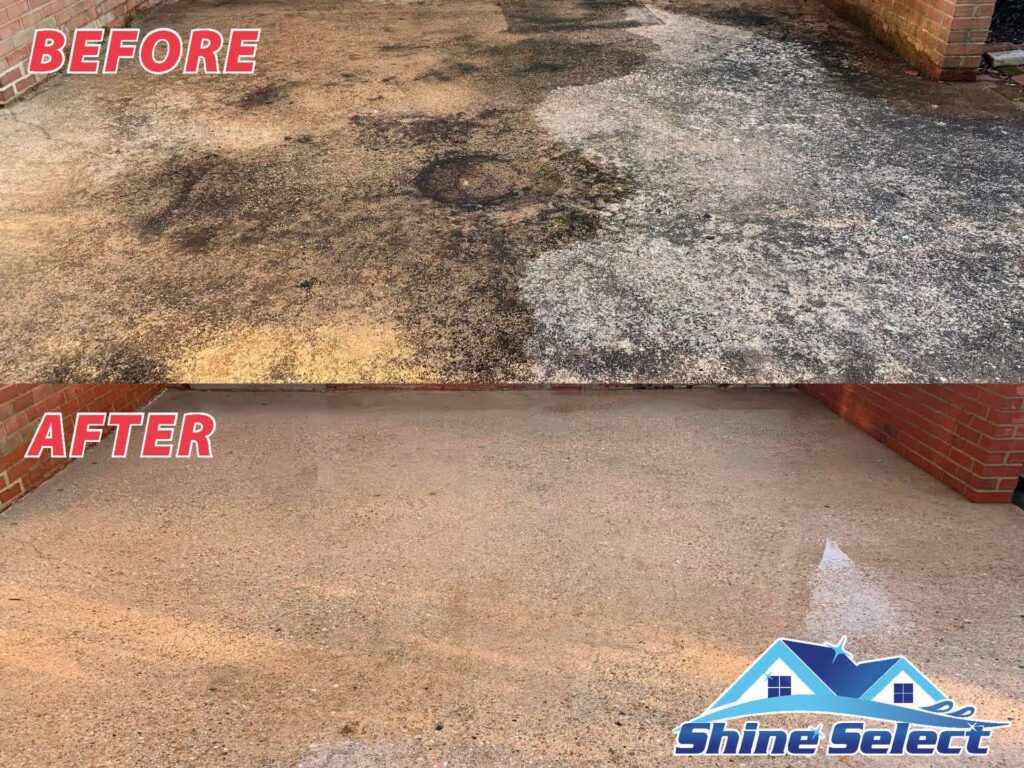
Why Concrete Stains Are So Stubborn (Especially in the DC Metro Region)
Concrete looks solid, but it is actually a highly porous material. Oil, rust-causing minerals, and organic grime do not just sit on top of the surface. They migrate deep into those microscopic pores, which is exactly why a quick spray from the garden hose rarely makes a dent.
In our service area specifically, the problem is compounded by regional climate conditions. Maryland driveways typically endure somewhere between 10 and 20 freeze-thaw cycles each winter, where temperatures repeatedly cross the freezing threshold in both directions. Each cycle forces moisture deeper into concrete pores, carrying contaminants along with it. Virginia summers bring high heat and persistent humidity that accelerate the oxidation of metal objects resting on concrete surfaces, intensifying rust staining. Meanwhile, in busy neighborhoods around Washington DC, driveways and parking areas see heavy traffic from older vehicles that are more likely to leave oil drips behind.
Add road salt into the mix during winter months, and you have a recipe for stains that bond aggressively to the surface and are genuinely resistant to consumer-grade cleaning products. This is why professional pressure washing, done correctly, makes such a significant difference.
Understanding the Three Most Common Concrete Stains
Not all stains are created equal, and each type requires a tailored approach. Here is a breakdown of what we see most often at Shine Select and how we address each one.
Oil and Grease Stains
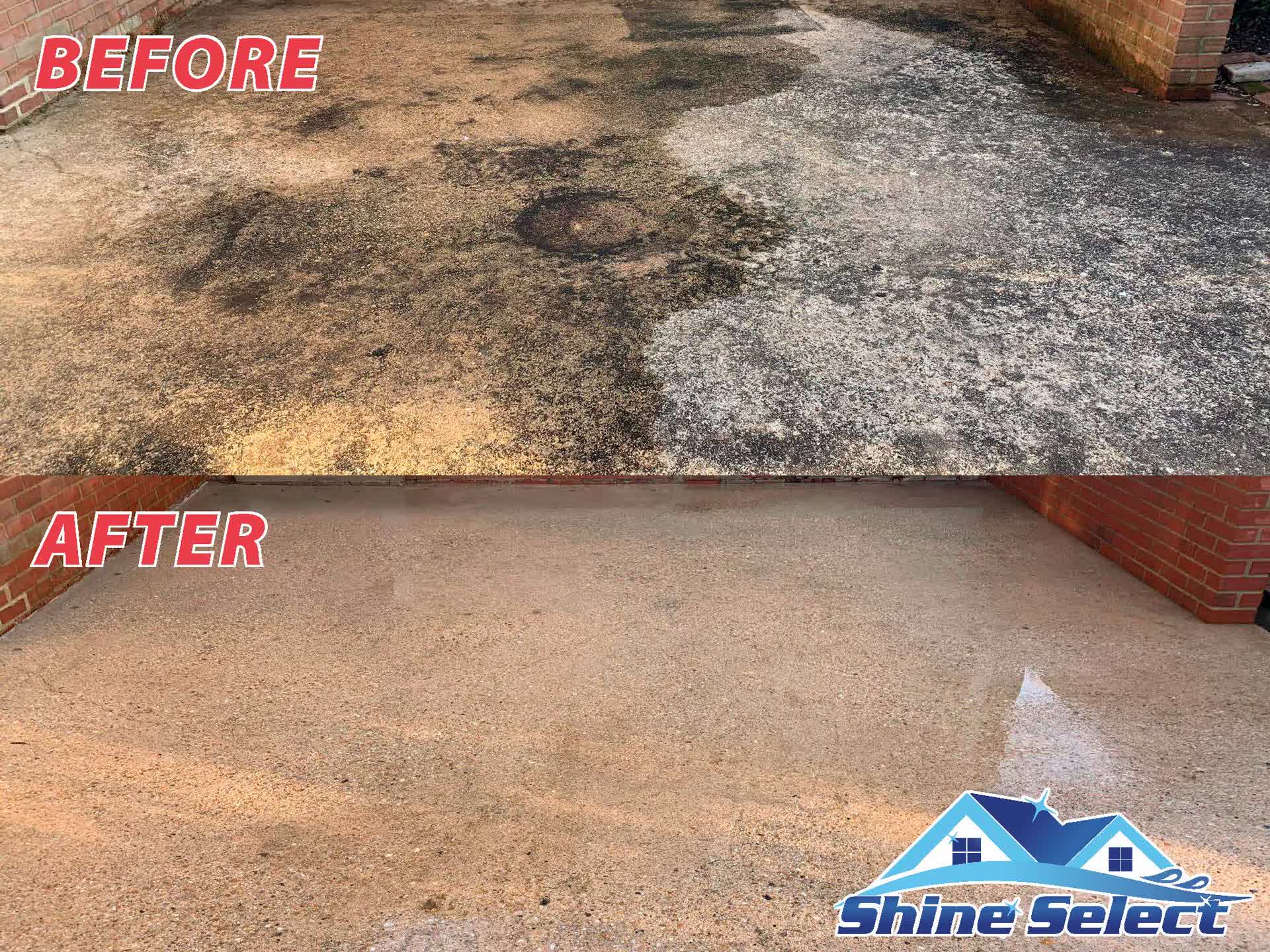
Oil is the most frequently encountered concrete stain across our service area. Whether it drips from a car parked in a Northern Virginia garage, leaks from equipment stored on a Maryland patio, or accumulates over years of use in a DC commercial parking lot, oil bonds stubbornly to porous concrete.
The key to effective oil removal is a two-step process. First, a professional-grade biodegradable degreaser is applied directly to the stain and allowed to penetrate the concrete, breaking down the molecular bonds holding the oil in place. For older, deep-set stains, this dwell time is critical. Rushing past it and going straight to high-pressure washing is one of the most common mistakes DIYers make, and it is why so many homeowners end up with stains that lighten but never fully disappear. After the degreaser has done its work, our team uses commercial-grade pressure washers with carefully selected nozzle settings to flush the emulsified oil out of the concrete’s pores without etching or damaging the surface.
Rust Stains
Rust stains are arguably the trickiest type to remove, and they are extremely common in our region. Maryland’s wet, humid summers mean that any metal object left on concrete, from a patio chair leg to a forgotten nail, will begin to oxidize quickly. The resulting iron oxide migrates into the concrete and creates those telltale reddish-brown streaks that are highly resistant to standard cleaning methods.
Our approach to rust removal involves applying a targeted acid-based treatment that reacts with the iron oxide, dissolving it rather than simply scrubbing over it. We use formulations that are effective against deep discoloration while being safe for the concrete surface itself. Poorly handled acid treatments can etch and permanently damage concrete, which is why this is a job best left to professionals who understand application rates, dwell times, and proper neutralization techniques.
Embedded Grime and Organic Buildup
Over time, high-traffic concrete surfaces accumulate layers of compacted dirt, tire residue, algae, mold, and mildew. In the shaded driveways and patios common to wooded neighborhoods throughout Northern Virginia and the Maryland suburbs, organic growth can turn concrete surfaces slippery and unsightly surprisingly fast. This type of buildup responds well to hot water pressure washing combined with appropriate cleaning agents, restoring both the appearance and the safety of the surface.
Our Pressure Washing Process: What Sets Shine Select Apart
At Shine Select, we follow a thorough, multi-step process designed to deliver results that hold up over time rather than just look good for a week.
We begin with a surface assessment. Before a single drop of water hits your concrete, we evaluate the type and severity of staining, check the condition of the surface (including any existing cracks or sealant), and identify the right combination of cleaning agents and pressure settings for the job.
Pre-treatment comes next. We apply the appropriate cleaning solution for the stain type, whether that is a degreaser, rust dissolver, or mildew-fighting agent, and allow adequate dwell time for it to penetrate and do its work. This step is what separates a professional result from a disappointing DIY outcome.
Then comes the pressure washing itself. We use commercial-grade equipment that delivers consistent, calibrated pressure. Using the correct PSI setting for concrete matters enormously. Too little pressure, and stubborn stains remain. Too much, and you risk etching the surface or forcing water into cracks. Our team is trained to use the right nozzle angles and distances for each specific surface and stain type.
Finally, we offer guidance on post-cleaning protection. For clients whose concrete has been freshly cleaned, applying a quality penetrating sealer afterward dramatically reduces the risk of future staining by limiting how deeply contaminants can penetrate the surface. Given the climate demands our region places on concrete, this step is something we genuinely recommend.
The Real Cost of Ignoring Concrete Stains
Beyond curb appeal, there are practical reasons to address concrete stains promptly. Oil that is allowed to sit on concrete does not just look bad. It can accelerate surface degradation, making the concrete more susceptible to freeze-thaw damage when winter arrives. Rust stains, when caused by rebar or reinforcing steel near the surface beginning to corrode, can signal deeper structural issues that become more costly to address over time.
For business owners in the Washington DC metro area, the appearance of your parking areas and entryways directly influences how customers perceive your operation. For homeowners in Virginia and Maryland, a clean, well-maintained driveway or patio contributes meaningfully to property value and neighborhood pride.
Regular professional pressure washing, typically on an annual or biannual schedule depending on traffic and exposure, is one of the most cost-effective ways to protect a concrete investment and avoid the much larger expense of premature replacement.
Tips for Maintaining Clean Concrete Between Professional Cleanings
We want our customers to feel confident caring for their surfaces between visits. A few straightforward habits make a real difference.
Address fresh oil spills as quickly as possible. The longer oil sits, the deeper it penetrates. Blotting up the excess immediately and covering the area with an absorbent material buys time and limits how far the stain spreads into the concrete’s pores.
Avoid overusing road salt or ice melt products on concrete surfaces in winter. While salt is sometimes necessary for safety, it accelerates surface wear and makes concrete more vulnerable to absorbing stains. Environmentally friendlier de-icing alternatives are worth exploring for patios and driveways.
Keep metal objects off concrete when possible, especially during humid summer months, to reduce the rust staining risk. Simple rubber feet or pads under patio furniture legs go a long way.
And when in doubt, call the professionals before a stain has had months or years to set in deeply. Early intervention produces the best results with the least effort.
Ready to Restore Your Concrete? Let’s Get Started.
Whether you are dealing with an oil-stained garage floor in Northern Virginia, rust-streaked patio pavers in Maryland, or years of accumulated grime on a DC commercial property, Shine Select is ready to help. Our team brings the expertise, equipment, and commitment to quality that your concrete surfaces deserve. Contact us today to schedule your consultation and take the first step toward cleaner, better-protected concrete.