Roof Algae & Moss Dangers in VA, DC & Maryland
Ignoring roof algae and moss can allow moisture to remain on or around roofing materials, contribute to lifted or deteriorating shingles, and increase the risk of water reaching vulnerable areas beneath the roof surface. In Virginia, Washington DC, and Maryland, professional roof washing helps remove organic growth before it becomes a larger maintenance concern.
At Shine Select, we help homeowners protect and refresh exterior surfaces with professional cleaning solutions designed around the material being treated. Roof cleaning requires particular care because aggressive methods can damage shingles instead of protecting them. Our team focuses on safe, effective roof washing that addresses algae, moss, and unsightly staining while treating your home with the attention it deserves. For property owners throughout Virginia, Washington DC, and Maryland, routine roof care can improve curb appeal, help maintain roofing materials, and catch unwanted organic growth before it becomes more difficult to manage.
How Professional Roof Washing Helps Protect Your Roof From Algae and Moss
Black streaks and green patches are more than an appearance issue. Roof algae and moss are different organisms, but both can thrive where moisture and favorable growing conditions are present.
The Asphalt Roofing Manufacturers Association (ARMA) identifies Gloeocapsa magma as one of the most prevalent algae species responsible for brown-to-black roof discoloration. ARMA notes that algae spores are transported through the air and can collect and grow on roofing and other exterior surfaces.
What Happens If You Leave Moss Growing on a Roof?
Moss can trap moisture and debris and may eventually interfere with the way roofing materials shed water. Oregon State University Extension reports that moss on asphalt and metal roofs can lift roofing materials and allow water to penetrate and affect underlying layers.
As moss becomes established, homeowners may encounter problems such as:
- Shingles or roofing materials beginning to lift
- Moisture remaining against the roof longer
- Debris collecting around moss growth
- Greater opportunity for water to reach vulnerable roofing layers
- More difficult removal as growth becomes heavier
Moss commonly favors damp, shaded areas. Roof sections beneath mature trees or with limited direct sunlight can therefore deserve extra attention.
Are Black Streaks on a Roof Algae or Dirt?
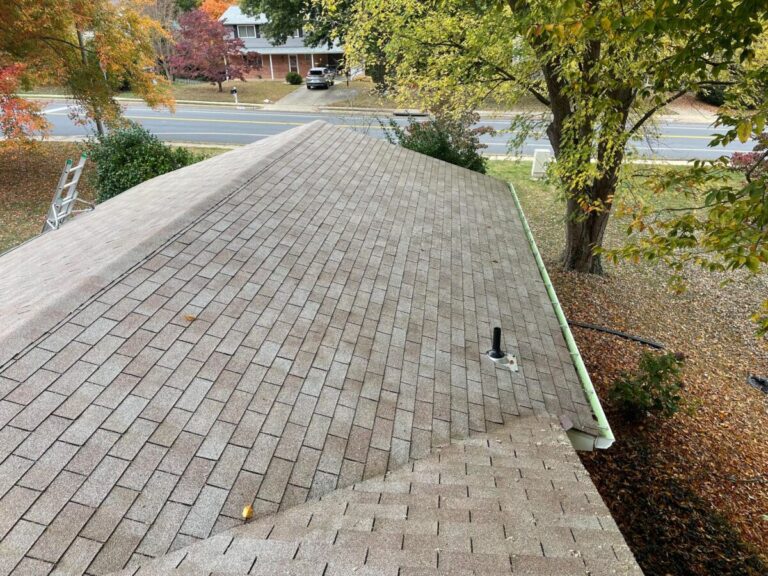
Those dark streaks are often algae rather than ordinary dirt. ARMA explains that algae-related discoloration typically appears brown to black and may be mistaken for soot, dirt, fungus, moss, or tree debris.
This distinction matters because simply trying to blast the discoloration away is not necessarily the right solution.
Algae spores can travel through the air, meaning growth is not necessarily a sign that a homeowner has neglected the property. Once conditions are favorable, staining can gradually become more noticeable.
Professional roof washing targets the organic contamination itself while taking the roofing material into account.
Why Are Mid-Atlantic Roofs Vulnerable to Organic Growth?
Moisture, rainfall, shade, and warm seasonal temperatures can create favorable conditions for algae and moss. NOAA’s current U.S. Climate Normals use 1991 through 2020 data to describe typical temperature and precipitation conditions, and NOAA notes that much of the Mid-Atlantic became wetter compared with the previous 1981 through 2010 normals period.
For homeowners in Virginia, Washington DC, and Maryland, that makes moisture management an important part of exterior property care.
A home surrounded by mature trees in Northern Virginia, a shaded property in suburban Maryland, or a house in the tree-lined neighborhoods around Washington DC may have roof sections that dry more slowly after rainfall. Leaves, twigs, and other organic debris can make matters worse by retaining additional moisture.
Practical steps homeowners can take include:
- Check the roof periodically from the ground for black streaks or green growth.
- Keep gutters and roof valleys free of accumulated debris.
- Trim vegetation where appropriate to improve sunlight and airflow.
- Address visible moss before it becomes thick and established.
- Use roof-appropriate cleaning methods instead of automatically reaching for a pressure washer.
Can Pressure Washing Damage Roof Shingles?
Yes, improper high-pressure washing can damage roofing materials, particularly asphalt shingles. Oregon State University Extension advises against high-pressure devices on composite shingles because they can remove portions of the protective granule layer and reduce roof quality and longevity.
That is one reason roof washing should not be treated like cleaning a concrete driveway.
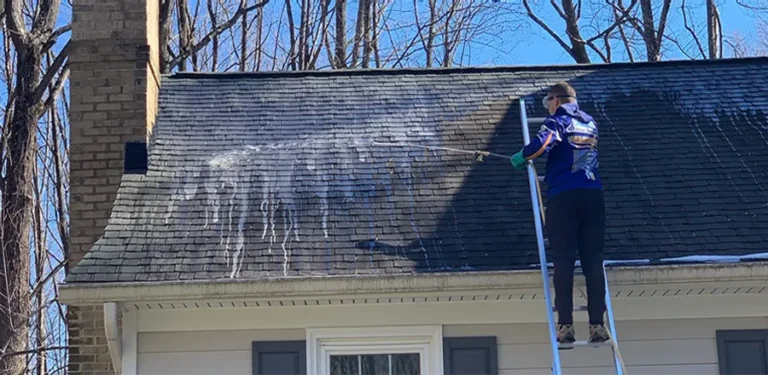
Roofing materials require a more controlled approach. A professional can evaluate the type and extent of staining or organic growth and select an appropriate cleaning process rather than relying on excessive pressure.
Homeowners should also remember that working on a roof presents significant fall hazards, and algae or moss can make the surface particularly slippery. Professional service avoids the need to climb onto a wet or contaminated roof with cleaning equipment.
When Should You Have Algae or Moss Removed?
Roof algae and moss should generally be addressed when growth or staining becomes visible rather than waiting for heavy accumulation. Earlier attention can make organic growth easier to manage and provides an opportunity to evaluate areas where moisture and debris repeatedly collect.
Watch for warning signs including:
- Black or dark brown streaks spreading across shingles
- Green patches developing on shaded roof sections
- Thick or raised moss around shingle edges
- Leaves and debris collecting in valleys
- Roof areas that remain damp noticeably longer than surrounding sections
Oregon State University Extension also recommends improving sunlight exposure where possible because moss thrives in shade and moisture. Trimming nearby vegetation can help change the conditions that encourage recurring growth.
Professional roof washing should be considered preventive exterior maintenance, not just cosmetic cleaning. Removing unwanted growth helps restore a cleaner appearance while addressing conditions that could otherwise become more troublesome over time.
Frequently Asked Questions About Roof Algae and Moss
Does roof algae mean I need a new roof?
Not necessarily. Dark roof streaks can be algae discoloration rather than evidence that the roof needs replacement. A professional evaluation can help distinguish surface contamination from roofing damage.
Does moss actually damage roof shingles?
Moss can contribute to roofing problems by holding moisture and debris and, on some roofing systems, lifting materials enough to allow water to reach underlying layers. Oregon State University Extension specifically warns that moss can lift shingles on asphalt roofs.
Can I pressure wash moss off my roof?
High-pressure cleaning is generally not appropriate for asphalt composite shingles. Oregon State University Extension warns that high-pressure devices can remove protective granules and degrade roof quality and longevity.
How can I help prevent roof moss from returning?
Keep the roof clear of debris, reduce excessive shade where practical, maintain gutters, and address growth early. Increasing sunlight and reducing moisture retention can make the roof less favorable for recurring moss.
Protect Your Roof With Professional Roof Washing
Roof algae and moss rarely become less noticeable on their own. Addressing organic growth early can improve your home’s appearance, reduce moisture-related concerns, and help keep roofing materials cleaner without resorting to potentially damaging DIY pressure washing.
For homeowners throughout Virginia, Washington DC, and Maryland, Shine Select provides professional roof washing with a focus on careful service, effective cleaning, and long-term property care.
Ready to remove unsightly roof algae and moss? Contact us to schedule professional roof washing and give your roof the care it deserves.