Can Brick and Stone Be Pressure Washed Without Causing Damage?
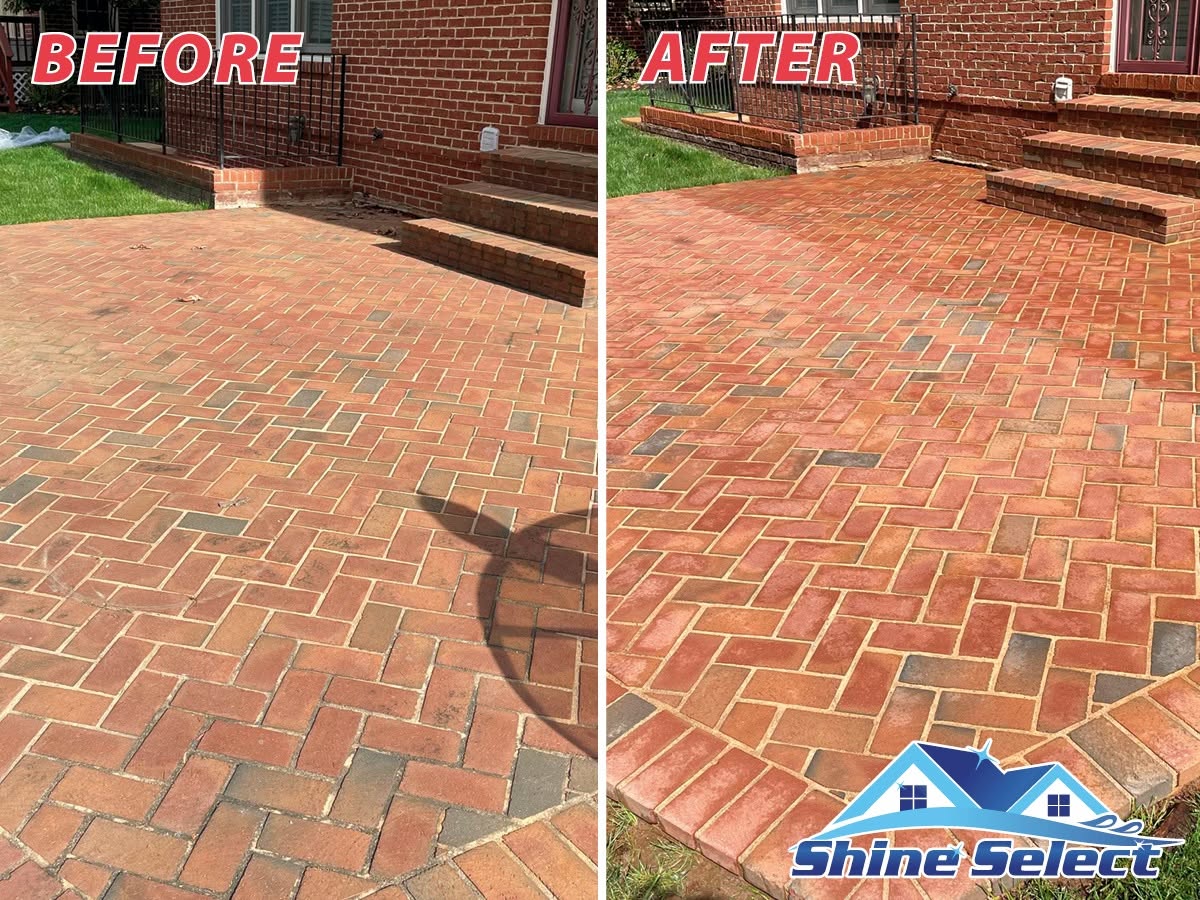
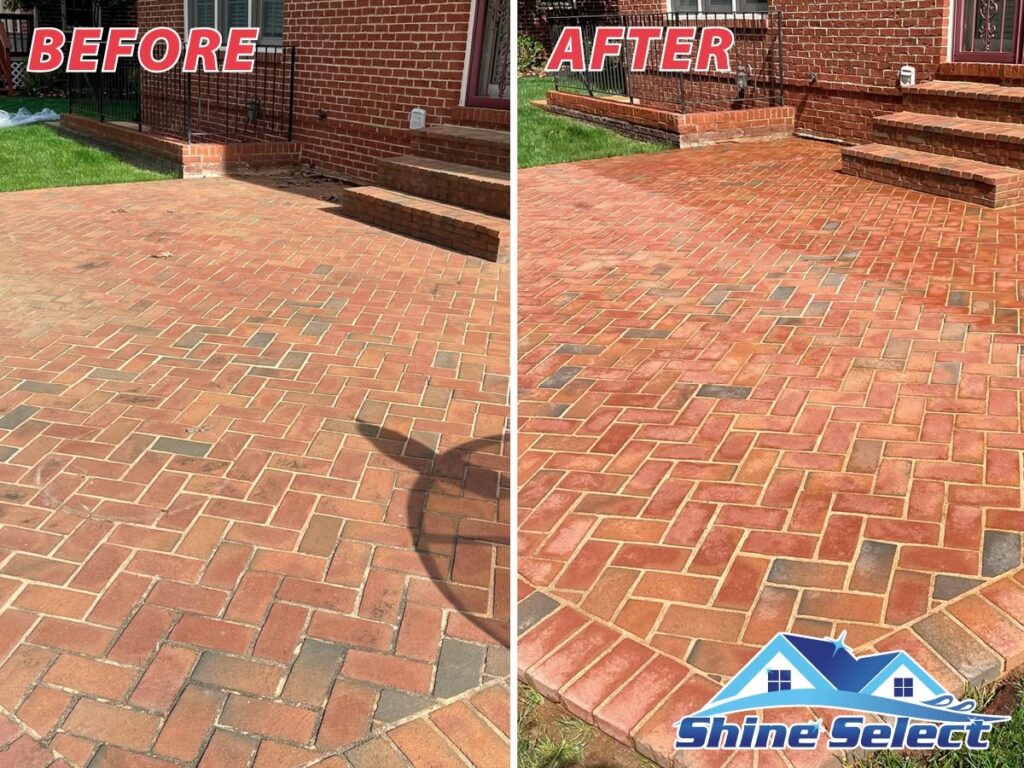
Yes, brick and stone can be pressure washed safely, but the cleaning method must be matched to the specific masonry surface. Excessive pressure, harsh chemicals, or incorrect technique can damage mortar joints, etch natural stone, or alter brick finishes. Professional pressure washing reduces these risks by using controlled pressure, appropriate cleaning solutions, proper rinsing, and surface testing before full-scale cleaning.
At Shine Select, we understand that masonry cleaning is not a one-setting-fits-all job. Brick homes, stone patios, retaining walls, walkways, commercial facades, and other masonry surfaces can vary significantly in age, condition, porosity, and composition. Our professional cleaning approach is designed to remove dirt, organic growth, staining, and buildup while protecting the surface underneath. For property owners throughout Virginia, Washington, DC, and Maryland, that careful approach is particularly valuable because exterior masonry faces year-round exposure to moisture, vegetation, seasonal temperature changes, and freeze-thaw conditions.
Safe Pressure Washing for Brick and Natural Stone Surfaces
The safest way to pressure wash masonry is to use the lowest effective pressure combined with the correct cleaning solution and technique. More pressure does not automatically produce a better result.
In fact, the Brick Industry Association recommends relying on the chemical reaction of an appropriate cleaner rather than aggressive scrubbing or excessive sprayer pressure. Its guidance also recommends low pressure, less than 400 psi, when flushing cleaning solutions from brickwork unless testing or prior experience with the specific brick establishes that higher pressure will not cause damage.
That is one reason professional experience matters. The right process depends on what is being cleaned, what caused the discoloration, and the condition of the masonry.
What Can Go Wrong When Brick Is Pressure Washed Incorrectly?
Improper pressure washing can permanently damage brick finishes and weaken already vulnerable areas of masonry.
According to the Brick Industry Association, most brick can be cleaned with pressurized water, but power washing should be handled by professionals experienced with masonry because improper use can permanently damage the brick’s finish. The organization also advises against wire brushes, metal scrapers, harsh chemicals, abrasive cleaners, and muriatic acid for routine brick care.
Common problems caused by overly aggressive cleaning can include:
- Damage to the face or finish of the brick
- Erosion or deterioration of mortar joints
- Uneven coloration or visible cleaning marks
- Water being forced into vulnerable cracks or joints
- Failure to completely remove cleaning chemicals
- Damage to adjacent materials, landscaping, or finishes
Older masonry deserves additional attention. If mortar is already deteriorating, bricks are spalling, or cracks are present, cleaning should not begin with the assumption that high pressure is appropriate.
A professional should inspect the surface first and adjust the cleaning process accordingly.
Can You Pressure Wash Natural Stone?
Natural stone can be professionally cleaned, but the stone type must be identified before selecting cleaners or cleaning intensity. Limestone, sandstone, granite, marble, and other natural stones do not react identically to water, chemicals, or pressure.
The Natural Stone Institute recommends understanding a stone’s geological classification and composition before deciding how to clean it. Calcareous stones, which contain calcium carbonate, are particularly sensitive to acidic solutions. The Institute recommends mild, non-acidic cleaners for these materials and notes that acidic cleaners can dull or etch certain natural stones.
Professional stone cleaning therefore starts with identification, not pressure.
The technician should consider:
- Stone type: Granite may tolerate a different cleaning process than limestone or sandstone.
- Porosity: More porous surfaces can absorb greater amounts of water and cleaning solution.
- Surface condition: Cracks, loose mortar, flaking, or deterioration may require a gentler approach.
- Type of staining: Algae, mildew, dirt, rust, oil, and efflorescence can require different treatments.
- Surrounding materials: Windows, siding, painted surfaces, plants, metals, and sealants may need protection.
For example, the Natural Stone Institute notes that outdoor biological growth such as algae, mildew, lichens, moss, and fungi can be treated with an appropriate diluted cleaning solution. The organization also advises seeking professional help for difficult stone problems.
Why Is Professional Masonry Cleaning Safer Than DIY Pressure Washing?
Professional masonry cleaning focuses on achieving the desired result with controlled pressure instead of simply using the strongest available setting.
A homeowner using a pressure washer may see a dark stain disappear and assume the process is working perfectly. The problem is that visible cleaning does not necessarily mean safe cleaning. A concentrated stream can remove grime while simultaneously affecting mortar or the surface texture of the masonry.
A professional process typically includes:
- Inspecting the brick, stone, and mortar before cleaning
- Identifying existing deterioration or vulnerable areas
- Testing the cleaning method in a small, inconspicuous location
- Selecting a cleaner compatible with the masonry
- Allowing the cleaning solution appropriate dwell time
- Adjusting pressure, nozzle selection, distance, and technique
- Thoroughly rinsing the cleaned surface
- Checking the finished area for consistent results
Testing is particularly important. The Brick Industry Association’s cleaning guidance emphasizes trial cleaning and evaluating cleaning methods before proceeding broadly.
Professional pressure washing is ultimately about control. The objective is not to determine how much pressure a surface can withstand. It is to determine the safest effective method for getting it clean.
Why Do Masonry Surfaces in Virginia, DC, and Maryland Need Regular Cleaning?
Mid-Atlantic masonry is continually exposed to moisture, shade, organic debris, and seasonal temperature changes that can contribute to staining and biological growth.
Brick walkways shaded by mature trees, stone patios near landscaping, retaining walls, steps, and north-facing building surfaces can gradually develop dark organic buildup. Dirt, algae, mildew, moss, and other contaminants can change the appearance of otherwise attractive masonry.
Winter conditions introduce another consideration. Moisture within vulnerable masonry can be affected by repeated freezing and thawing. The Natural Stone Institute notes that freeze-thaw cycles can damage the structure of stone, making proper care and treatment particularly important in colder climates.
From historic brick architecture throughout Washington, DC, to brick homes in Northern Virginia and stone hardscaping across Maryland, the region contains an enormous variety of masonry. That variety makes surface-specific cleaning especially important.
Regular professional cleaning can help maintain curb appeal, remove organic buildup, and give technicians an opportunity to identify visible deterioration before an aggressive cleaning method makes an existing problem worse.
Frequently Asked Questions About Pressure Washing Brick and Stone
Does pressure washing damage brick mortar?
It can. Excessive pressure can affect deteriorated or vulnerable mortar, which is why the masonry and joints should be inspected before cleaning and the lowest effective pressure should be used.
What PSI should be used to clean brick?
There is no universal pressure appropriate for every brick surface. The Brick Industry Association recommends pressure below 400 psi for flushing cleaning solution from brickwork, unless trial cleaning or experience with the specific brick demonstrates that higher pressure will not cause damage.
Can you use acid to clean natural stone?
Acidic cleaners should not be treated as universally safe for natural stone. The Natural Stone Institute warns that calcium carbonate-based stones are sensitive to acids and that acidic products can dull or etch certain stone surfaces.
How often should brick and stone be professionally cleaned?
There is no single schedule for every property. Cleaning frequency depends on shade, moisture exposure, surrounding vegetation, traffic, surface type, and the speed at which dirt or biological growth returns. Cleaning based on actual surface condition is generally more useful than following an arbitrary annual schedule.
Protect Your Masonry While Bringing Back Its Appearance
Brick and stone are valued for durability, but durable does not mean indestructible. The safest masonry cleaning combines the right cleaner, controlled pressure, careful application, thorough rinsing, and an understanding of the surface being treated.
Shine Select provides professional pressure washing and exterior cleaning for properties throughout Virginia, Washington, DC, and Maryland. We take a surface-specific approach designed to deliver a noticeable clean without unnecessarily putting valuable masonry at risk. Ready for Professional Brick and Stone Cleaning? Contact Shine Select today to request service.